Mara Long · 26 September 2026
Integrating Privacy Protocols with Service Transition Tools for Enhanced User Protection in Digital Migrations
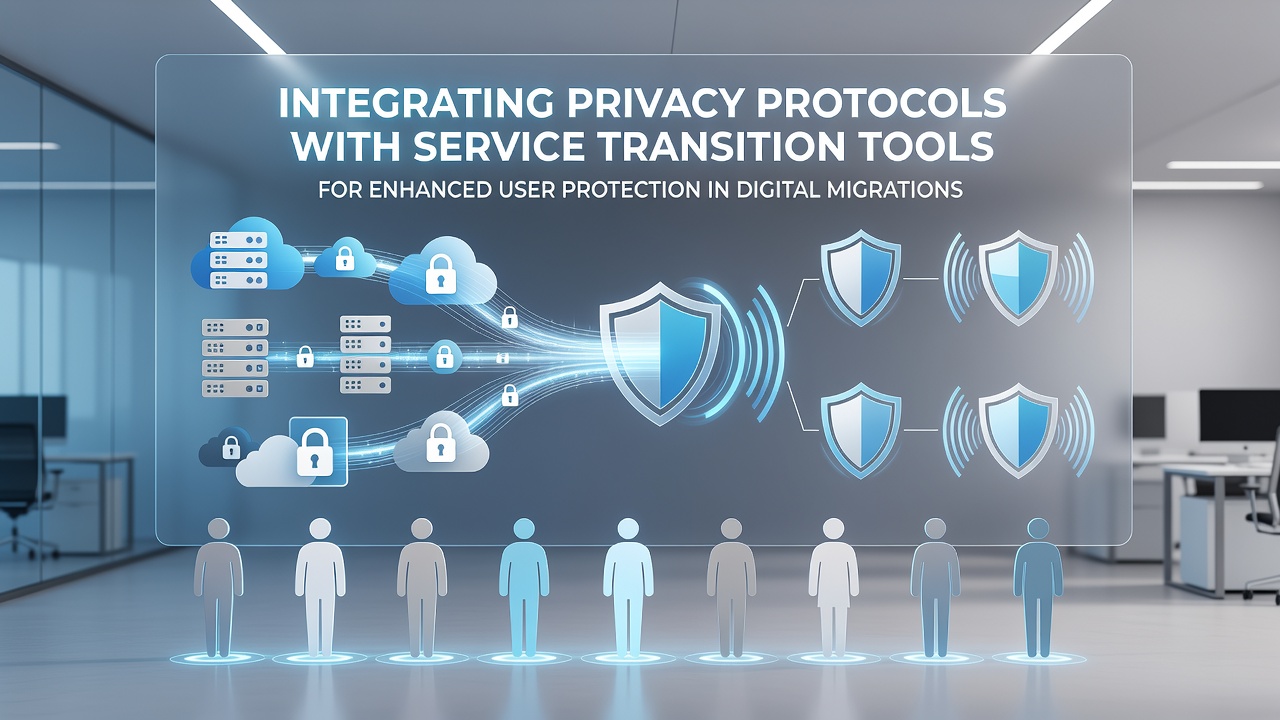
Digital migrations have become routine across enterprises and individual users alike as organizations shift data between cloud platforms, software services, and storage systems, yet these transfers introduce exposure points that require careful handling through combined privacy measures and transition utilities. Service transition tools manage the movement of accounts, files, and configurations while privacy protocols supply encryption standards, access controls, and consent verification layers that operate at each stage of the process.
Core Components of Service Transition Tools
Service transition tools typically include automated scripts for data mapping, API connectors that preserve metadata integrity, and validation checkpoints that confirm successful transfers without duplication or loss, according to industry reports on enterprise data handling. These utilities track every packet and permission change so that administrators retain visibility throughout the migration window, which often spans several days or weeks depending on volume and complexity.
Researchers at academic institutions have documented how unmonitored transitions can leave residual copies on source servers or intermediate caches, creating opportunities for unauthorized access if not addressed through layered safeguards. When privacy protocols integrate directly with these tools, they enforce data minimization rules that strip unnecessary identifiers before movement begins and apply differential privacy techniques to obscure patterns in large datasets.
Privacy Protocol Integration Methods
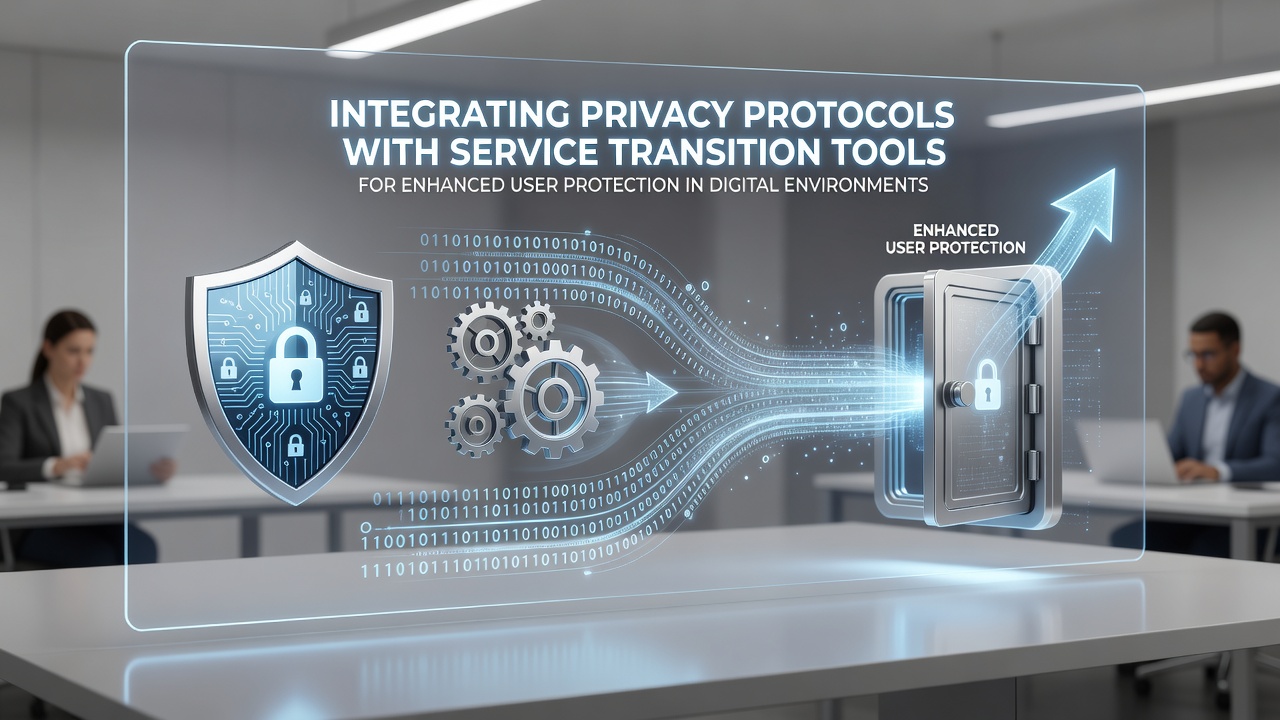
Integration occurs through modular plug-ins that sit alongside transition workflows, applying end-to-end encryption during transit and at-rest encryption once data reaches the destination environment. Tokenization replaces sensitive fields with non-reversible references while consent management modules log user approvals at each checkpoint, ensuring compliance records remain intact and auditable. Observers note that this approach aligns with requirements outlined in frameworks from the Office of the Privacy Commissioner of Canada, where organizations must demonstrate accountability for personal information throughout its lifecycle.
One study revealed that organizations adopting combined systems reduced exposure incidents by coordinating encryption key rotation with migration scheduling, so keys never remain static during extended transfer periods. Data from regulatory filings shows similar patterns in sectors handling health records and financial profiles, where transition tools now embed zero-knowledge proofs to verify integrity without revealing underlying content to intermediate processors.
Regulatory Context and September 2026 Developments
As of September 2026, updates to cross-border data transfer guidelines continue to emphasize verifiable protection mechanisms during service changes, prompting vendors to embed privacy checks into their migration suites by default. The Australian Information Commissioner has highlighted cases where integrated protocols prevented re-identification of anonymized records after platform switches, reinforcing expectations that tools must support ongoing compliance rather than one-time snapshots.
Those who manage large-scale migrations often discover that separate privacy and transition systems create gaps at handoff points, whereas unified implementations maintain continuous policy enforcement. Evidence from technical evaluations indicates that such unification also streamlines audit preparation because logs capture both movement metadata and privacy actions in a single timeline.
Implementation Examples Across Sectors
Take one healthcare network that synchronized its patient record migration with privacy-preserving tokenization, allowing the transition tool to process records while the protocol layer blocked any export of direct identifiers until final validation. Similar approaches appear in educational institutions transferring student information systems, where role-based access rules update automatically as data crosses environments. Figures from sector analyses reveal that these coordinated methods cut manual review time substantially while preserving chain-of-custody documentation required by oversight bodies.
What's interesting is how smaller organizations without dedicated security teams benefit when vendors deliver pre-configured bundles that activate privacy features upon detecting a migration trigger. This reduces configuration errors that previously arose when teams attempted to align separate products after the fact.
Conclusion
Integration of privacy protocols with service transition tools establishes a continuous protective envelope around data during digital migrations, supported by documented practices from multiple regulatory regions and technical evaluations. Organizations that adopt these combined approaches maintain visibility, enforce consent requirements, and limit residual exposure across source, transit, and destination stages. Ongoing refinements expected beyond September 2026 will likely standardize these combined capabilities further, reflecting accumulated evidence from implemented cases worldwide.